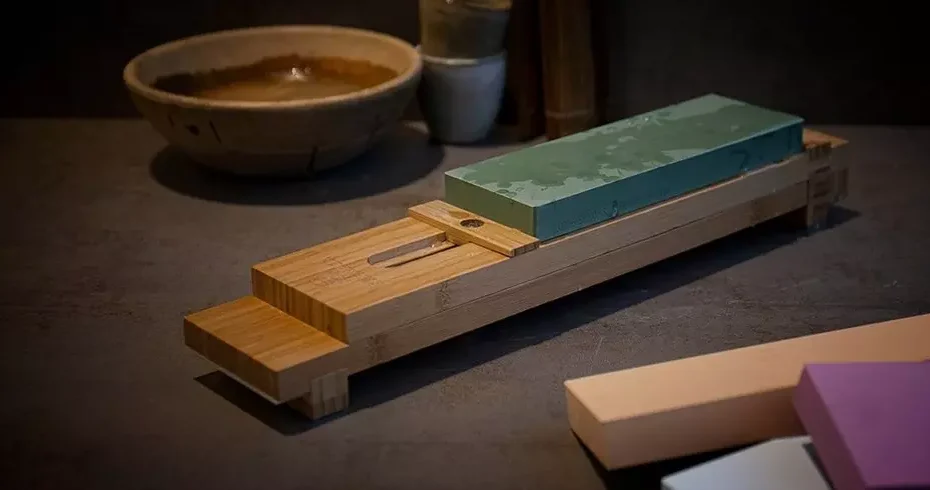
Maintaining a sharp blade is crucial for survivalists, outdoor adventurers, and anyone who relies on knives and cutting tools for daily tasks. A dull knife requires extra effort to cut, increasing the risk of slips and injuries. One of the most effective ways to sharpen a blade is by using a Japanese water stone, a sharpening method refined over centuries. Mastering how to use a Japanese water stone ensures tools remain reliable, whether in the wilderness or at home.
What Makes Japanese Water Stones Unique?
Japanese water stones, also known as whetstones, differ from other sharpening tools due to their water-absorbing properties. These stones create a slurry during sharpening, which enhances the cutting process and prevents overheating. Unlike oil stones that require lubrication with oil, water stones only need water, making them easier to clean and maintain.
These stones are available in different grit levels, each serving a specific sharpening function. A coarse grit, ranging from 200 to 800, is used to repair damaged blades and reshape edges. A medium grit between 1000 and 3000 refines the sharpness, while a fine grit, often 4000 to 8000 or higher, polishes the edge for a smooth, precise finish. Understanding which grit to use helps achieve the best results.
Preparing the Stone for Sharpening
Before using a Japanese water stone, it must be properly prepared. Soaking the stone in water for about 10 to 15 minutes allows it to absorb moisture, which is essential for effective sharpening. Some modern stones are designed for quick use and only need to be splashed with water before sharpening.
Once the stone is saturated, it should be placed on a stable surface to prevent slipping. Many sharpening kits include a rubber base or a non-slip mat to keep the stone securely in place. A stable work area is crucial for precision and safety.
Establishing the Correct Sharpening Angle
Holding the knife at the right angle is key to achieving a sharp edge. Most knives require an angle of 15 to 20 degrees for optimal sharpening. An easy way to gauge this angle is by first positioning the blade at 90 degrees, then halving it to 45 degrees, and finally reducing it again to about 20 degrees.
Maintaining a consistent angle while sharpening ensures an even edge and prevents excessive wear on the blade. With practice, keeping a steady angle becomes second nature, improving sharpening efficiency.
The Sharpening Technique
To begin sharpening, place the blade against the stone at the proper angle and push it forward in a smooth motion, as if trying to slice a thin layer off the stone’s surface. Applying gentle yet firm pressure ensures that the edge contacts the stone evenly.
It is essential to sharpen the entire length of the blade, moving from the base to the tip in a controlled manner. The process should be repeated evenly on both sides to maintain blade balance. The number of strokes depends on the blade’s condition, but starting with 10 to 20 per side is a good baseline.
Once the coarse grit has restored the edge, moving to a medium or fine grit stone helps refine the sharpness. This step removes any roughness left by the coarse grit and enhances the cutting ability of the blade. A final polish with an ultra-fine stone produces an exceptionally keen edge.
Evaluating the Blade’s Sharpness
After sharpening, testing the blade helps determine if further refining is needed. One simple test is slicing through a piece of paper—if the blade cuts smoothly without tearing, it is adequately sharpened. If it catches or drags, additional honing may be required.
Another test involves lightly dragging the blade across a fingernail. A properly sharpened edge will catch slightly with minimal pressure, indicating a precise finish.
Honing and Ongoing Maintenance
To extend the life of a sharp blade, regular honing is necessary. A honing rod or leather strop realigns the edge without removing significant material, reducing the frequency of sharpening sessions.
Caring for the water stone is equally important. After use, rinse it thoroughly to remove metal particles, then let it air dry before storing. Over time, the stone may develop uneven surfaces due to repeated sharpening. Flattening it with a lapping plate or a leveling tool restores its effectiveness, ensuring consistent results.
Avoiding Common Sharpening Mistakes
Beginners often make the mistake of using excessive force when sharpening, believing it speeds up the process. In reality, controlled, light pressure is more effective and prevents unnecessary wear on the blade and stone.
Another common error is inconsistent angle maintenance. If the angle fluctuates, the edge becomes uneven and requires additional sharpening to correct. Soaking the stone adequately is also essential—using a dry or insufficiently wet stone results in poor sharpening performance.
Skipping grit levels can also hinder results. Progressing from coarse to fine grit ensures the blade is properly honed and polished, leading to a longer-lasting sharp edge.
Why Japanese Water Stones Are Ideal for Survivalists
For survivalists, maintaining a sharp knife is a top priority. A well-honed blade is necessary for food preparation, cutting rope, shaping wood, and even self-defense. Knowing how to use a Japanese water stone ensures that cutting tools remain effective in various survival scenarios.
Additionally, Japanese water stones are portable and easy to maintain. Unlike electric sharpeners, which require power sources, water stones work anywhere with just a bit of water. This makes them a reliable sharpening solution in off-grid or wilderness situations.
Final Thoughts
Learning how to use a Japanese water stone is an invaluable skill that enhances the performance and durability of blades. With proper soaking, controlled sharpening techniques, and routine maintenance, anyone can master the art of blade sharpening. By avoiding common mistakes and following the correct process, knives remain razor-sharp and ready for any task. Whether used for daily activities or survival situations, sharpening with a Japanese water stone is a practical and effective way to maintain cutting tools at peak performance.