The Importance Of Shelter In Wilderness Survival
There’s an old survival saying that goes, “You can survive for three weeks without food, three days without water, three hours without shelter in extreme conditions, and three minutes without air.” This emphasizes the importance of knowing how to make a shelter in the wild, especially for beginners. This post explores the ins and outs of wilderness survival shelter building for beginners, offering the best techniques and materials to build a survival shelter, and real-world applications of these methods.
Have you ever wondered how long you’d last in the wilderness if you were suddenly stranded due to a natural disaster or simply got lost on a wilderness adventure? Knowing how to build a shelter from the materials found in your surroundings can mean the difference between life and death.
**Building A Wilderness Survival Shelter: Budget and Premium Options**
Survival shelters can be made from a wide range of materials, from the natural elements around you to sophisticated man-made materials. Let’s run through some options, categorized by budget levels.
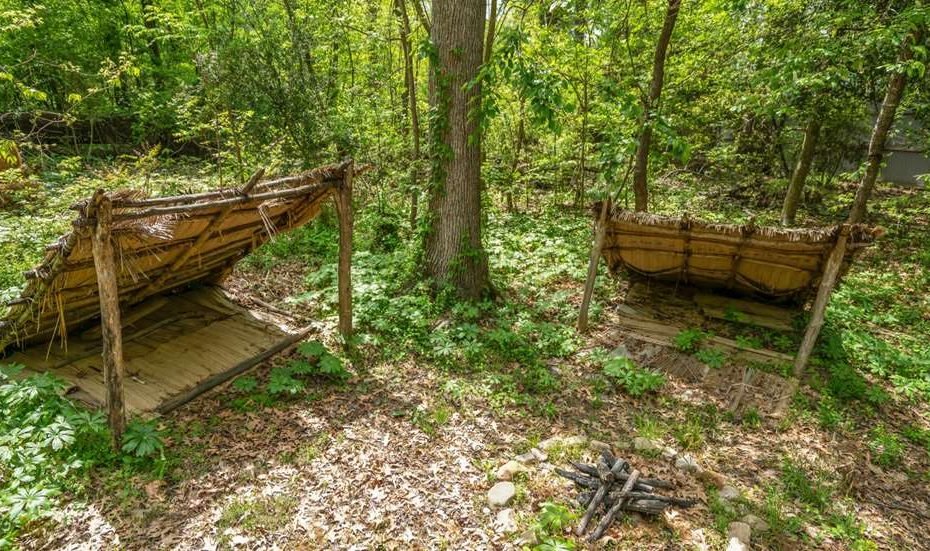
On a low budget, a good option is the ‘leaf hut’. This is an effective, albeit basic, two-person shelter. It’s relatively easy to build but requires a lot of leaves and debris. The principles of building a leaf hut are straightforward – build a sturdy frame out of branches and then pile on heaps of leaves for insulation.
For a mid-range budget, the ‘tube tent’ or ’emergency blanket shelter’ are great options. Tube tents are lightweight, easy to set up, and affordable. Simply string it up between two trees and it’s ready. Emergency blankets, on the other hand, are highly reflective and can help retain up to 90% of your body heat.
For those willing to invest in a high-end, hearty solution, a four-season tent is the way to go. These shelters are designed to withstand harsh conditions like heavy snow and high winds.
**Comparing Wilderness Shelter Materials and Durability**
It is valuable to consider the materials and durability of various shelter building options. Survival shelters made from natural materials like leaves and branches might be cost-effective but they aren’t as robust or long-lasting compared to man-made shelters. Tube tents, for instance, although more durable than leaf huts, are not designed for long-term use. However, when it comes to extreme conditions, four-season tents, made from high-quality materials, are the most durable and reliable option.
**Understanding the Real-World Application of Wilderness Shelters**
The type of shelter you choose to build largely depends on where you are and the resources at your disposal. In a deciduous forest with plenty of leaves and debris, a leaf hut would be an ideal choice. However, if you’re in a cold, extremely windy location, an options such as the four-season tent would be better suited for survival.
**Dismissing Myths Related to Building Wilderness Shelters**
A common misconception is that shelter always needs to be a physical structure. In some instances, locating an overhang or using available caves can serve as an effective shelter. You don’t necessarily need to expend energy building something from scratch when nature provides you with an existing structure.
Shelter is an essential need in any survival situation. When one is stranded in the wilderness, knowing how to build a shelter could become a life vs death skill. By understanding the different forms a shelter can take, from the primitive leaf hut to the sophisticated four-season tent, enables one to make the best out of a survival situation.
As a concluding note, it is worth mentioning that the theory behind building a shelter alone doesn’t quite cut it. Practice is absolutely necessary to ace this skill. Need a fun family outing idea? Why not make it a shelter building day! Plus, having the tools and gear increasing your chances at creating a sturdy, effective shelter. So equip yourself accordingly! With the right knowledge, skills, and tools, you’ll be well on your way to surviving the wilderness!
Keywords: Basic, Tube tent, Emergency blanket, Four-season tent, Shelter building, Wilderness survival, Durable, Long-lasting, Robust, Natural materials, Resources, Disposal, Overhang, Cave, Existing structure},